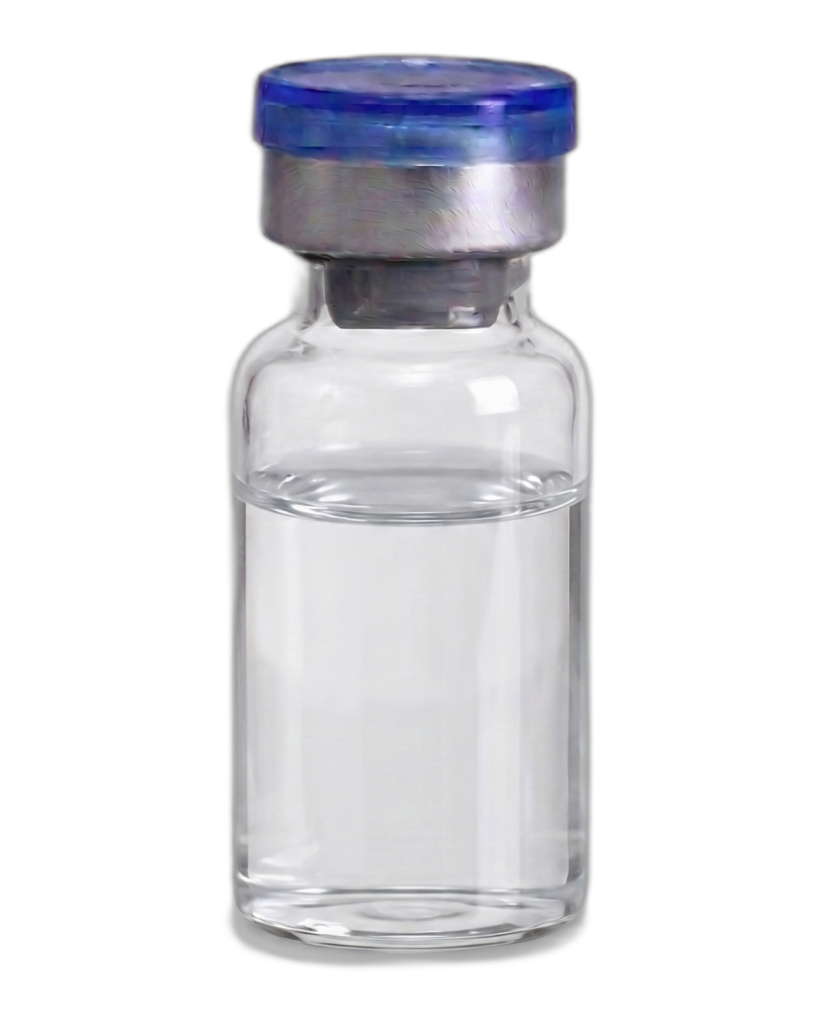
Lyophilized peptides arrive as dry powder and have to be brought into solution before any measurement can be made. The diluent chosen determines both how long the…
Read the full description →BAC Water
Sterile water USP containing 0.9% benzyl alcohol as a bacteriostatic preservative. Laboratory diluent for reconstituting lyophilized research peptides. Research use only.
Also searched as BAC water · bacteriostatic water USP · benzyl alcohol diluent
At a glance
BAC Water is sterile diluent · USP grade with bacteriostatic preservative.
- Supplied as
- Lyophilized (freeze-dried) powder in a sealed vial
- Vial sizes
- 3 mL · 10 mL
- Purity
- HPLC-verified, 99% or higher
- Certificate of analysis
- Published per lot at kinotype.shop/coa
- Ships
- From Texas to all 50 US states
- Intended use
- Laboratory research only. Not for human or veterinary use.
Chemical data
Handling & verification
Sterile water USP containing 0.9% benzyl alcohol as a bacteriostatic preservative. This is the diluent used to reconstitute lyophilized research peptides.
Why bacteriostatic rather than plain sterile water
Plain sterile water contains no preservative, so once the seal is broken the contents should be used immediately and the remainder discarded. The benzyl alcohol in bacteriostatic water suppresses bacterial growth, which is what allows a reconstituted stock to be drawn on more than once over a period of weeks rather than being made up fresh each time.
Storage and shelf life
Store unopened vials at room temperature, away from light. Once the septum has been punctured, refrigerate at 2–8 °C.
Bacteriostatic water is conventionally treated as good for around 28 days after first puncture. Discard beyond that, and discard immediately if the solution is cloudy, discoloured or contains visible particles.
Use
Wipe the septum with alcohol, then draw the required volume through it with a sterile needle and syringe. Add the diluent to a lyophilized peptide by directing it down the inside wall of the peptide vial rather than onto the powder, then swirl gently until dissolved. Do not shake.
Common questions
Does BAC Water come with a certificate of analysis?
Yes. Every lot of BAC Water ships with its own certificate of analysis showing HPLC purity, and the current certificate is published on our COA page before you buy — you do not have to order first or email anyone to see it.
What purity is BAC Water?
HPLC-verified at 99% or higher. The certificate for each lot states the measured figure, the detection wavelength and the method used, so the number can be checked rather than taken on trust.
How is BAC Water supplied and where does it ship?
It is supplied as lyophilized (freeze-dried) powder in a sealed vial, protected against light and impact. Full US shipping, operating from Texas. Delivery estimates are provided by the carrier at checkout.
How should BAC Water be stored?
Keep the lyophilized vial cold and dark — refrigerated for near-term use, frozen for longer storage. Once reconstituted it belongs in the refrigerator and its usable life is measured in weeks rather than months. Aliquot rather than thawing the same vial repeatedly, because freeze-thaw cycles cost more stability than most people expect.
How do I reconstitute BAC Water?
Add bacteriostatic water slowly down the inner wall of the vial so the stream does not strike the powder directly, then let it dissolve on its own — swirl gently if needed, never shake. The volume you add sets the concentration, so decide the concentration first and work backwards. Our free reconstitution calculator does that arithmetic and gives the volume to draw per aliquot.
Is BAC Water for human use?
No. BAC Water is supplied strictly as a reference material for laboratory research use only. It is not a drug, food, cosmetic or medical device, it is not for human or veterinary consumption, and it is not intended to diagnose, treat, cure or prevent any disease. We do not provide dosing guidance or protocols of any kind.
See the certificate · Reconstitution calculator · All questions
Handling guides
Other compounds
For laboratory and research use only. Not for human or veterinary use, diagnosis, or consumption. Products are sold to qualified researchers and are not drugs, foods, or cosmetics.